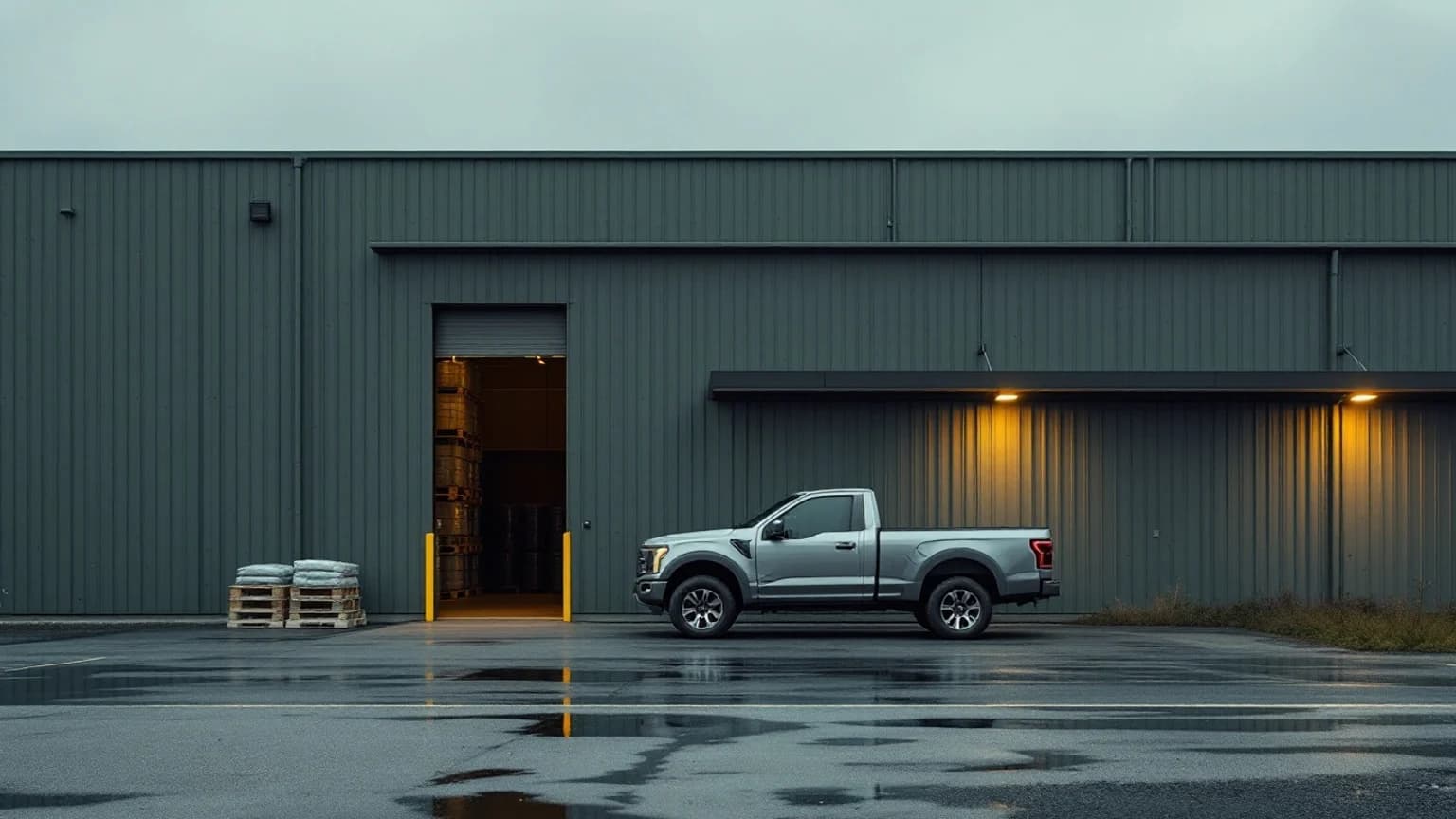
Fluorine-free firefighting foam. For seventy years the military's firefighting agent of choice was a compound it now turns out should not have been anyone's choice. AFFF — aqueous film-forming foam — put out jet-fuel fires beautifully and contaminated the groundwater under every base it was sprayed at. Section 322 of the FY2020 National Defense Authorization Act told the Department of Defense to stop buying AFFF that contains PFAS by October 1, 2023, and to stop using it on installations by October 1, 2024.
In January 2023, the Defense Logistics Agency published MIL-PRF-32725 — the performance spec for the replacement, a fluorine-free foam that has to put out a JP-5 fire in thirty seconds without poisoning the watershed. There is now a procurement category that did not exist three years ago, and the manufacturers in it have started raising serious capital.
Biobased polymers in federal facilities. The BioPreferred Program is the workhorse nobody knows about. Established by the 2002 Farm Bill under 7 U. S. C. § 8102, administered by USDA, it identifies categories of biobased products — everything from lubricants to carpet adhesives to insulation foams — and tells federal agencies they have to give preference to certified products in those categories. The 2024 Sustainable Procurement final rule consolidated the rules at FAR 23. 107-2 and put the reporting clause in every applicable contract at FAR 52. 223-2.
The designated-category list runs to more than a hundred. What that means in practice: a GSA building manager replacing a carpet, an Army base ordering hydraulic fluid, a Navy facility specifying paint — each of them sits inside a procurement framework that prefers the biobased version of the product. The preference does not always win. But it has to be considered, and twenty years of "has to be considered" turns into a market.
Plant-derived solvents and cleaners. The same logic runs through the cleaning closet. In August 2024, the EPA strengthened its Safer Choice Standard — the criteria a product has to meet to earn the Safer Choice label, anchored in TSCA and the Pollution Prevention Act. The new standard added an outdoor-use label, tightened ingredient screening, and put pressure on the conventional surfactant and solvent chemistry that has dominated industrial cleaning for fifty years. There are now about two thousand labeled products on the market.
That number sounds small until you remember what it represents: every gallon of plant-derived degreaser that earns the label is a gallon of petroleum-derived degreaser that did not get bought. The substitution is happening one SKU at a time, in places nobody writes profiles about — janitorial supply distributors, industrial facility procurement teams, mid-size manufacturers reformulating because their customer's specs changed.
Bamboo, hemp, mycelium. The categories that get the press — bamboo composites, hemp insulation, mycelium-grown packaging — are real and growing, but the press version is misleading. The interesting part is not that a startup grew a mushroom-based shipping container. The interesting part is that there is a BioPreferred designated category for that container, which means a federal buyer comparing options is operating under a procurement preference that did not exist twenty years ago.
The fashionable end of the regenerative economy and the unfashionable end share a buy-side. This is the trick of federal procurement: it doesn't pick winners, but it does enlarge the field. A material that would otherwise be a curiosity becomes a category. A category eventually becomes a line item. A line item eventually becomes a market.
The capital behind it. None of this would matter if there were nothing to buy. The manufacturers showing up to fill these specs need plants, equipment, fermentation tanks, extraction lines. Building that takes money. In 2022, the Inflation Reduction Act put five hundred million dollars into USDA's Section 9003 program — the Biorefinery, Renewable Chemical, and Biobased Product Manufacturing Assistance Program — to back loan guarantees of up to $250 million per project. The money is available through fiscal year 2031.
This is the capital stack behind the supply chain: not only venture rounds with press releases, but federal loan guarantees that let industrial capacity get built.